
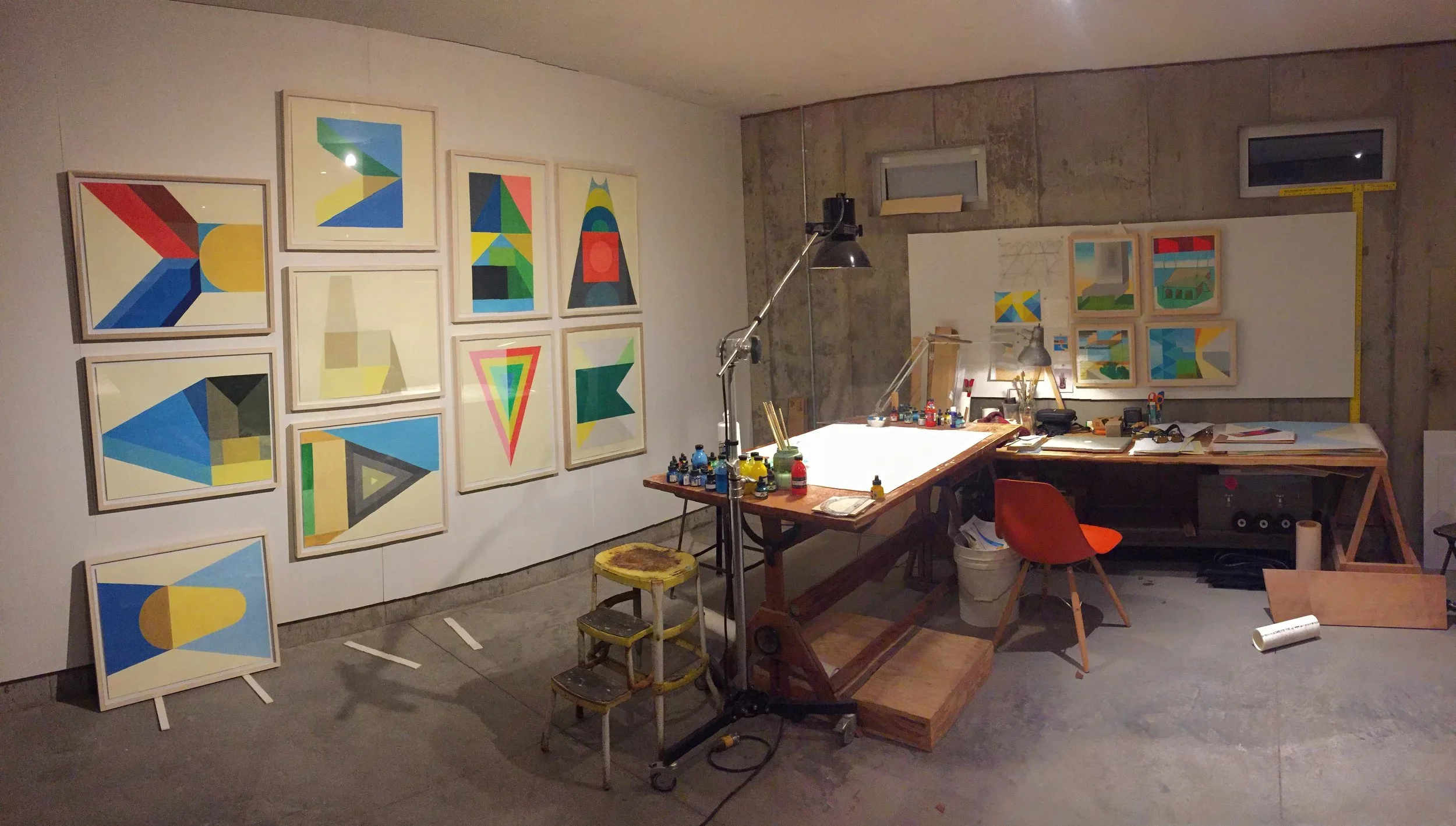
Maker Spotlight Series
MAKER SPOTLIGHT SERIES
GEORGE SCHMIDT
Multi-Discipline Artst
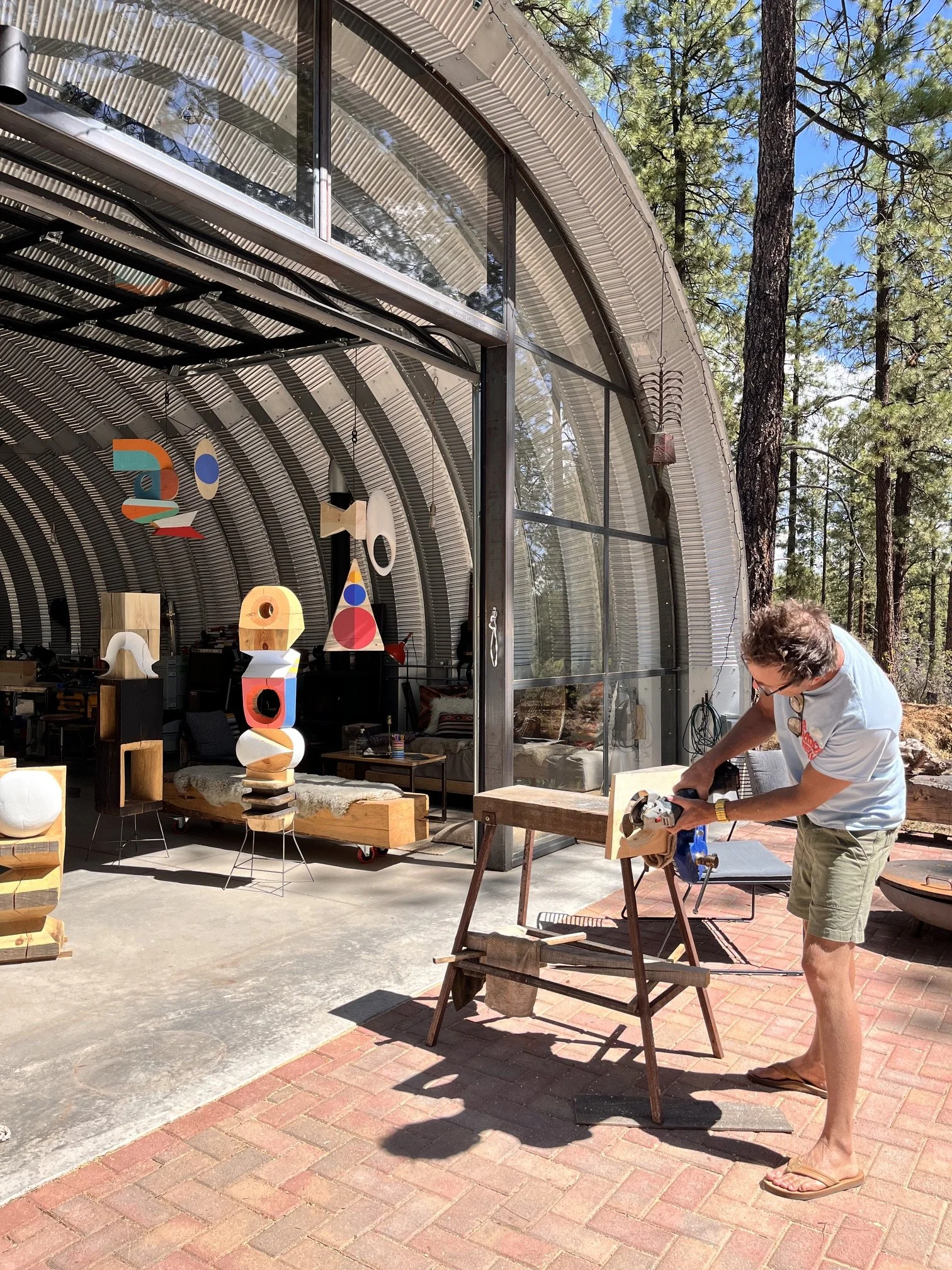
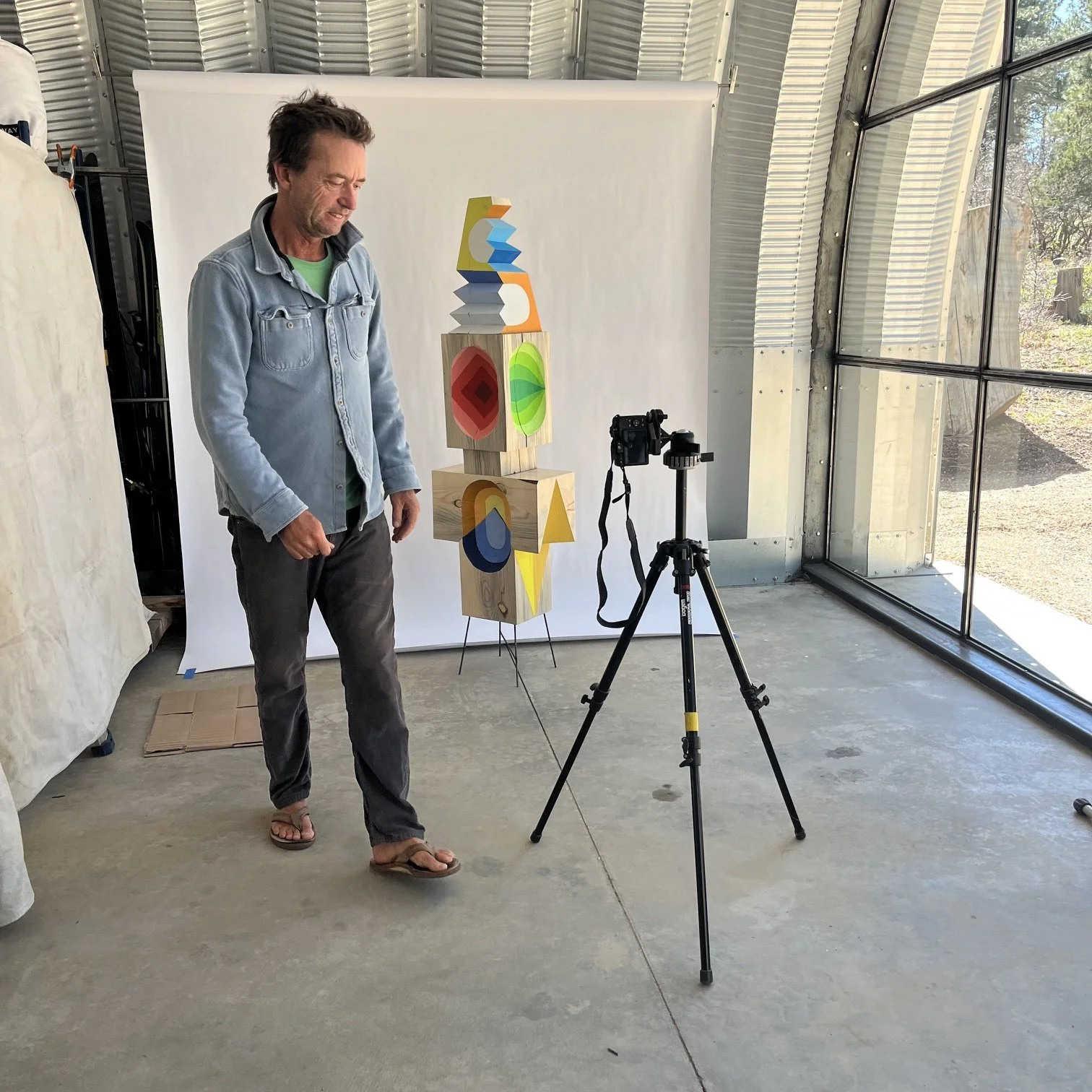
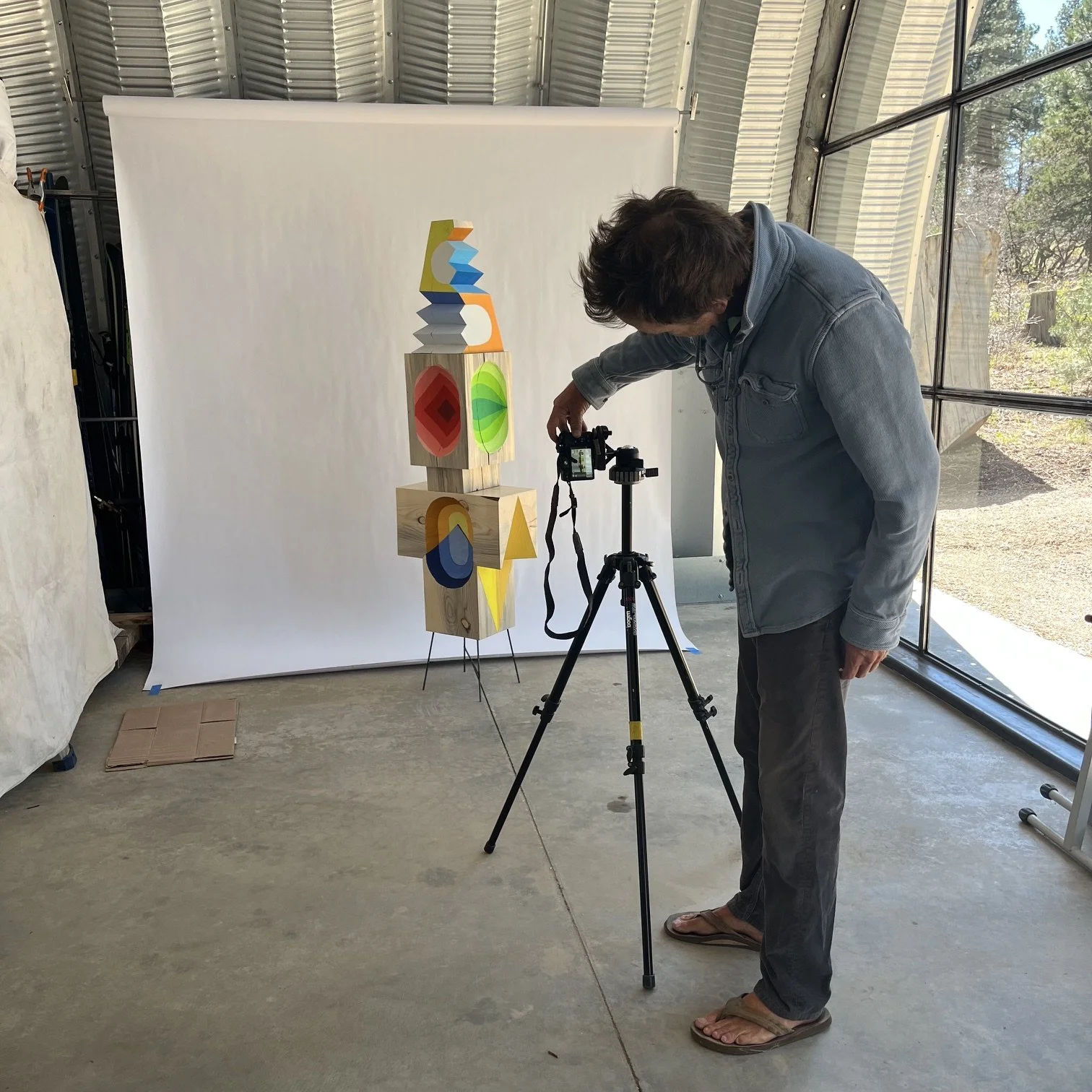
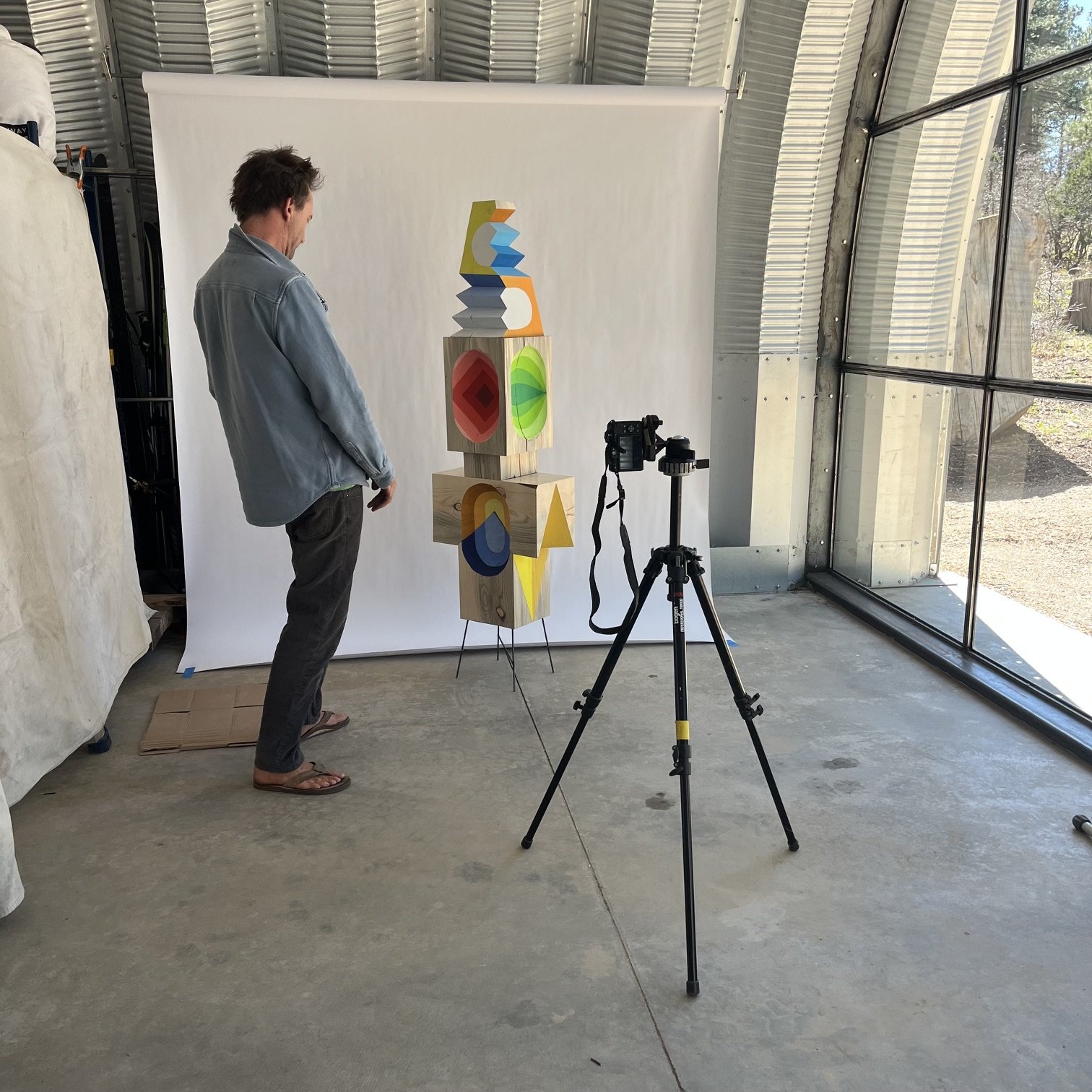
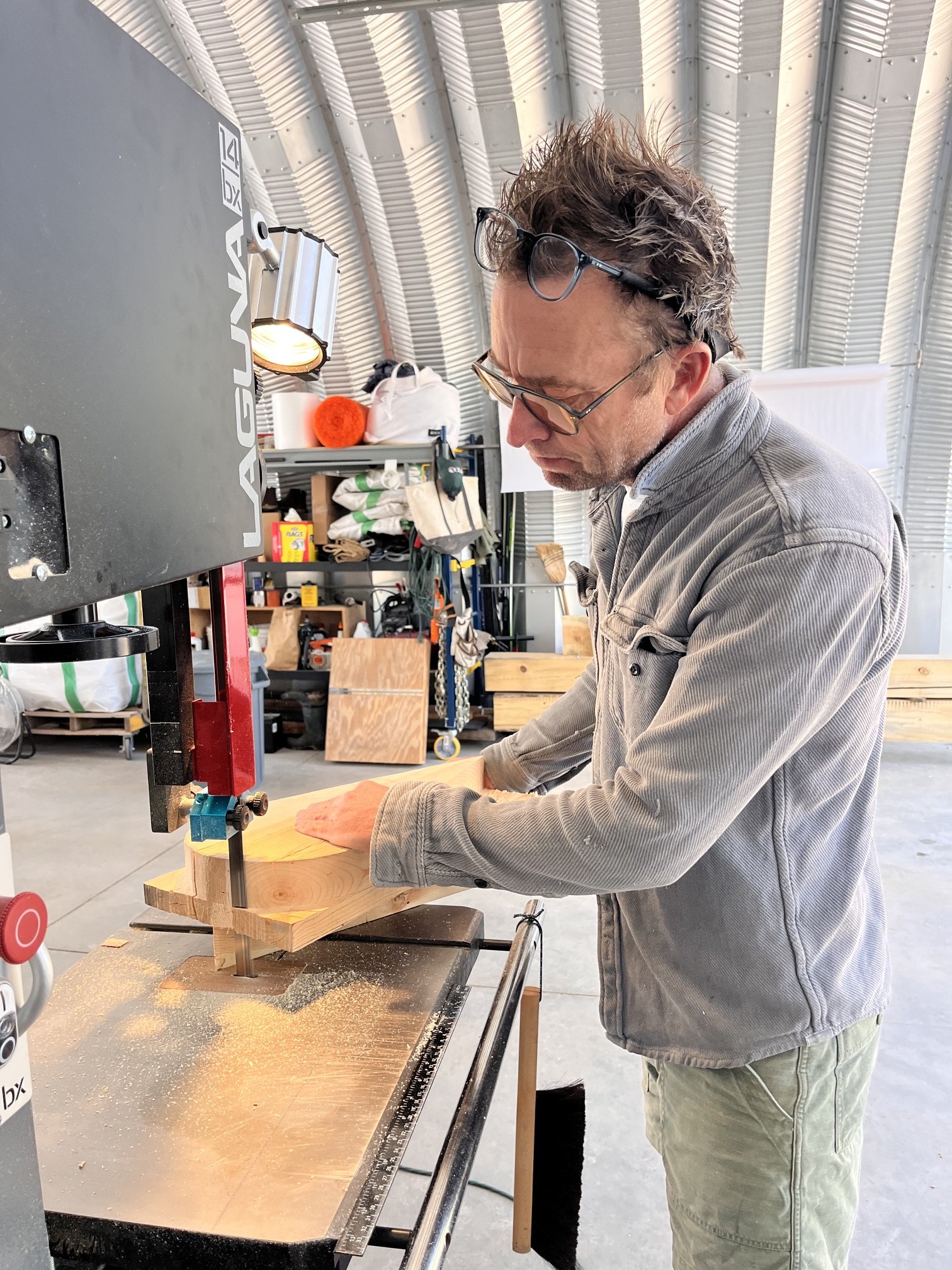
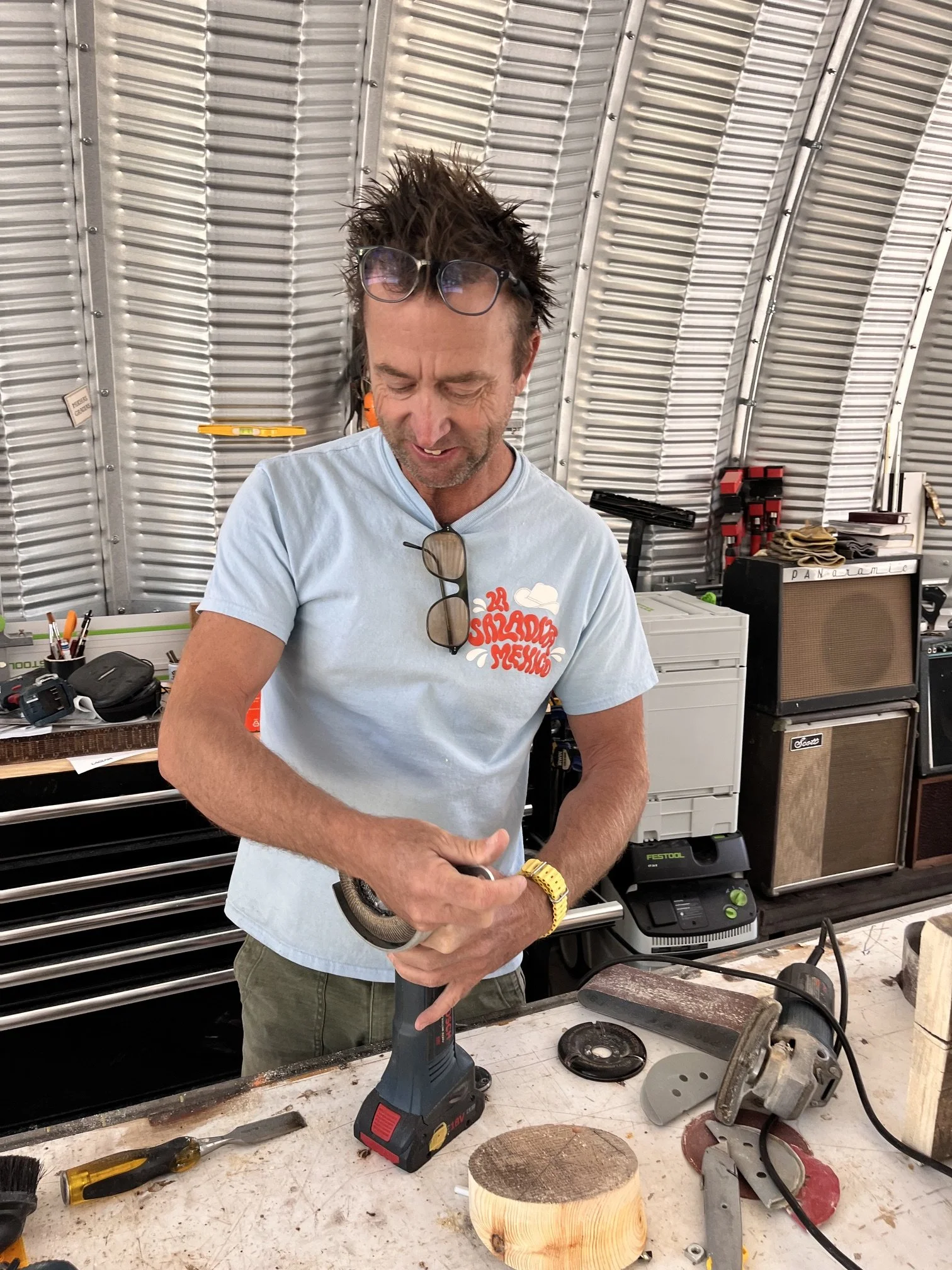
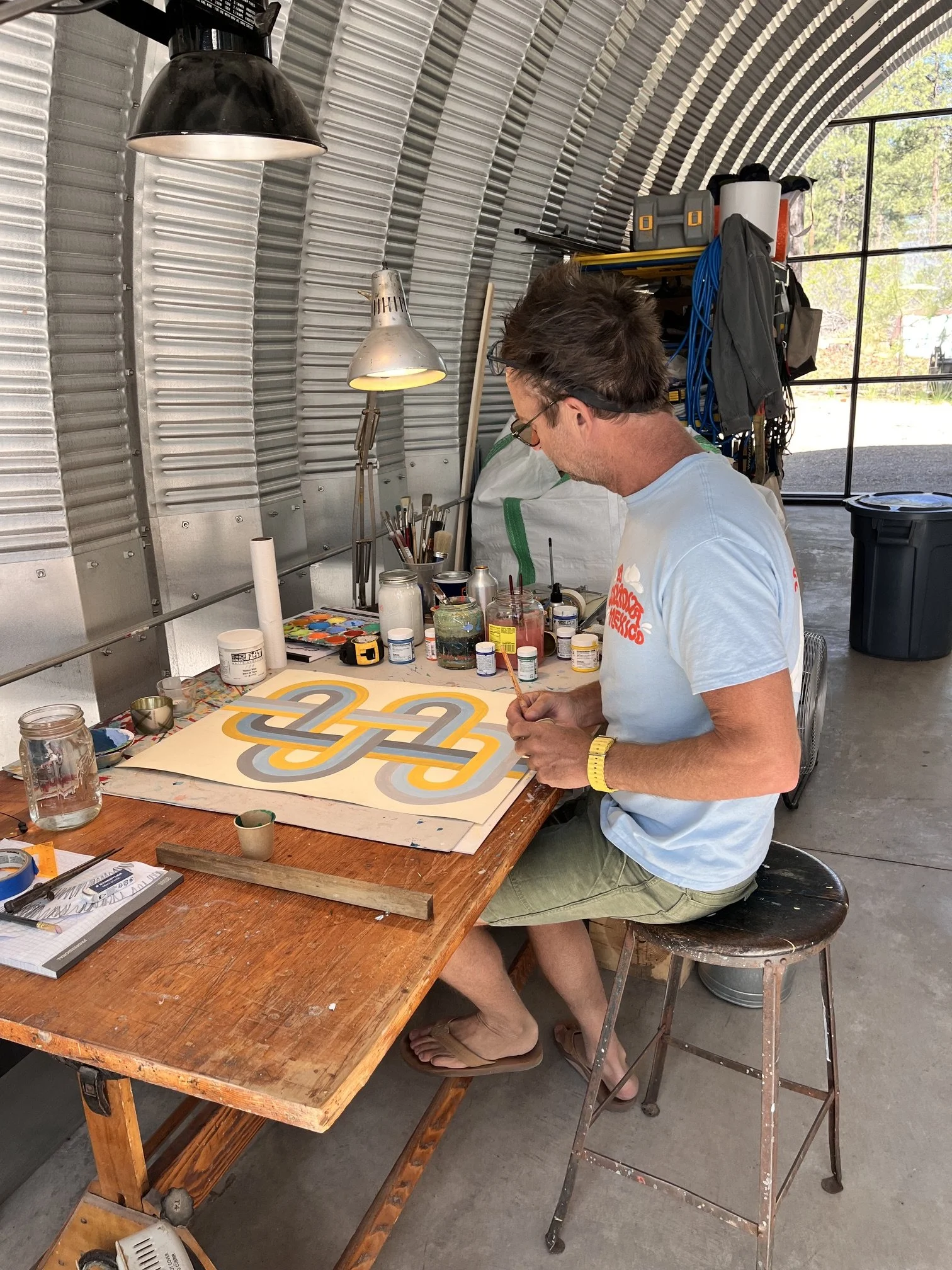
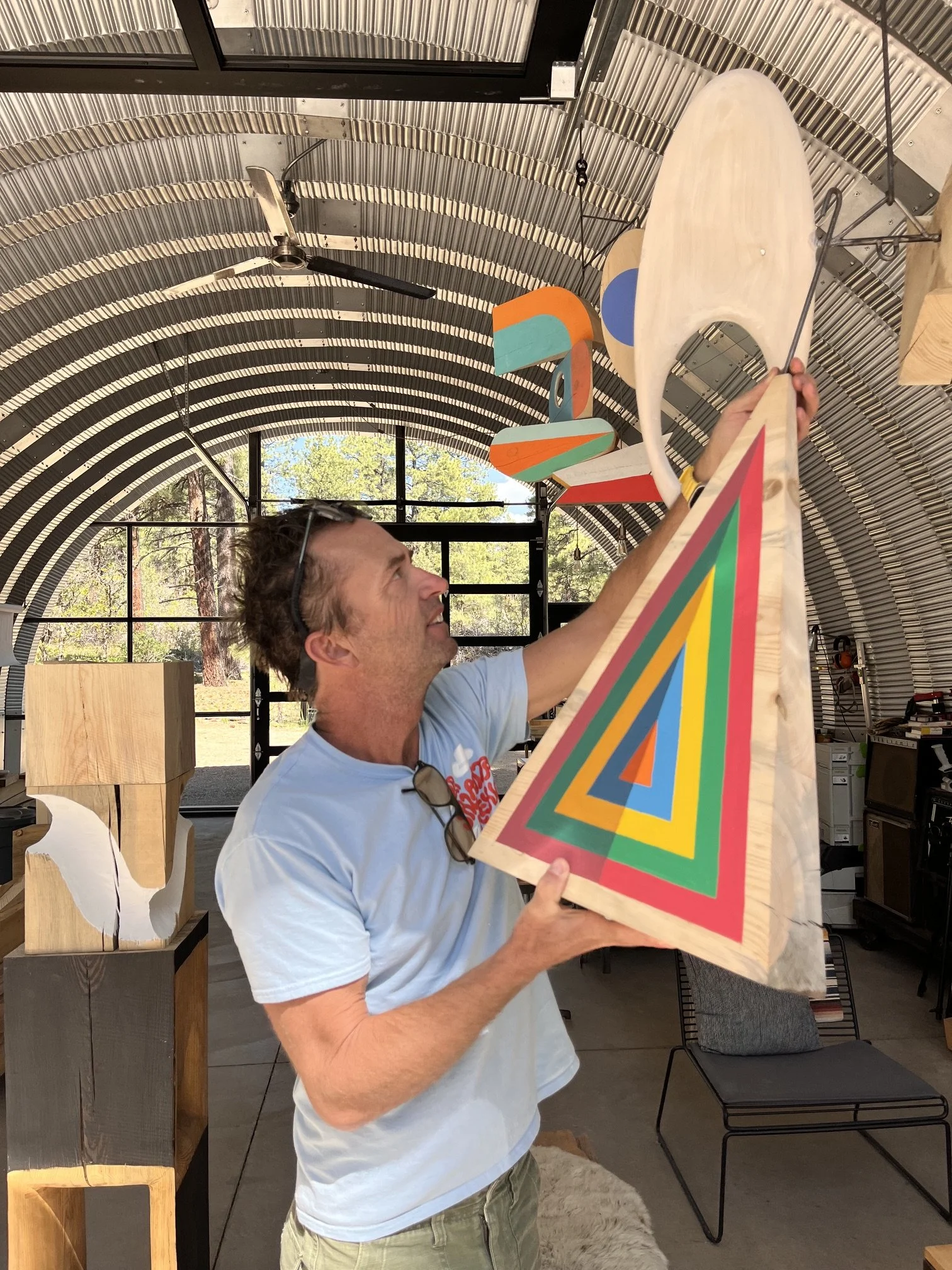
Artist George Schmidt at work at his home studio he built.
Tell us about yourself – what’s your story in a nutshell?
My name is George Schmidt. I've been making paintings, sculptures, furniture and buildings – and all kinds of stuff for as long as I can remember.
I went to an art magnet school for my BFA (Parsons School of Design) and MFA (School of the Art Institute of Chicago)… the whole shebang. I've been a working artist with an active studio practice for 25 years. I've never found anything better to do with myself and I feel very lucky that I’ve been able to follow my creative compulsions wherever they lead me over the years.
What drives your art?
What inspires?
Inspiration for me comes from multiple sources. It's more of a synthesis of interests: visual, spacial, musical, psychological. Mostly at this point I'm drawing from ideas that I’ve had for years and recycling them and mashing them into new forms – trying to see if I can see something new all the time.
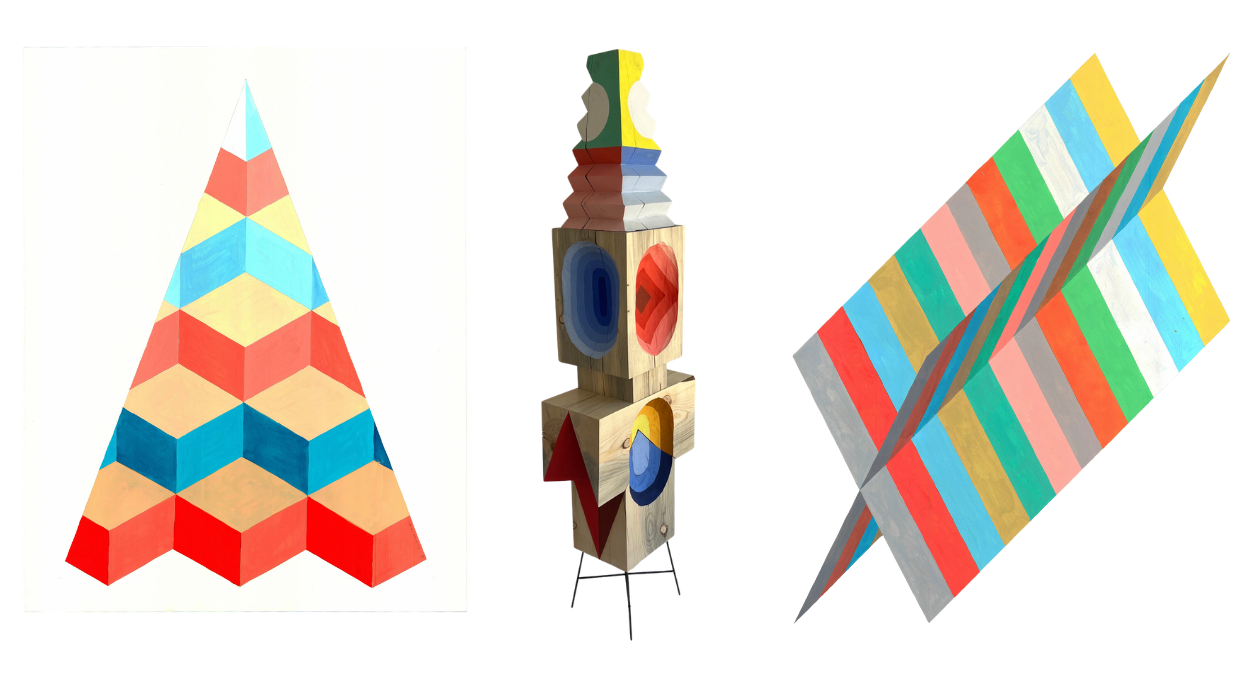
Its a process that is always changing, collaging, building on itself, but returning again and again to my core interests, color interactions, spacial interactions, our perceptual process, the way seeing some combination of parts in new or unexpected ways can simply put people in a novel headspace, where a different perspective emerges. You know, art!
What’s new? Where are you in your current evolution?
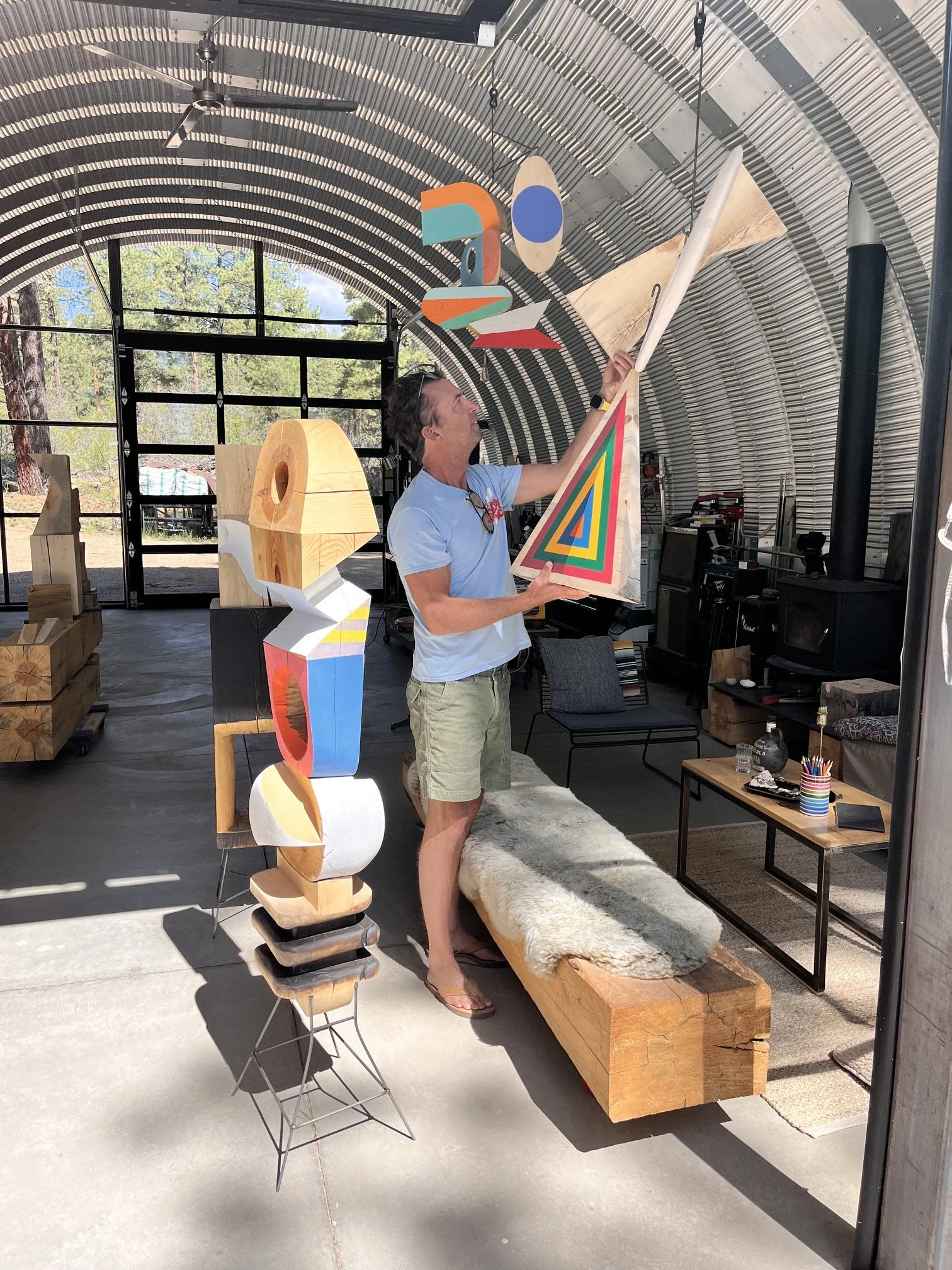
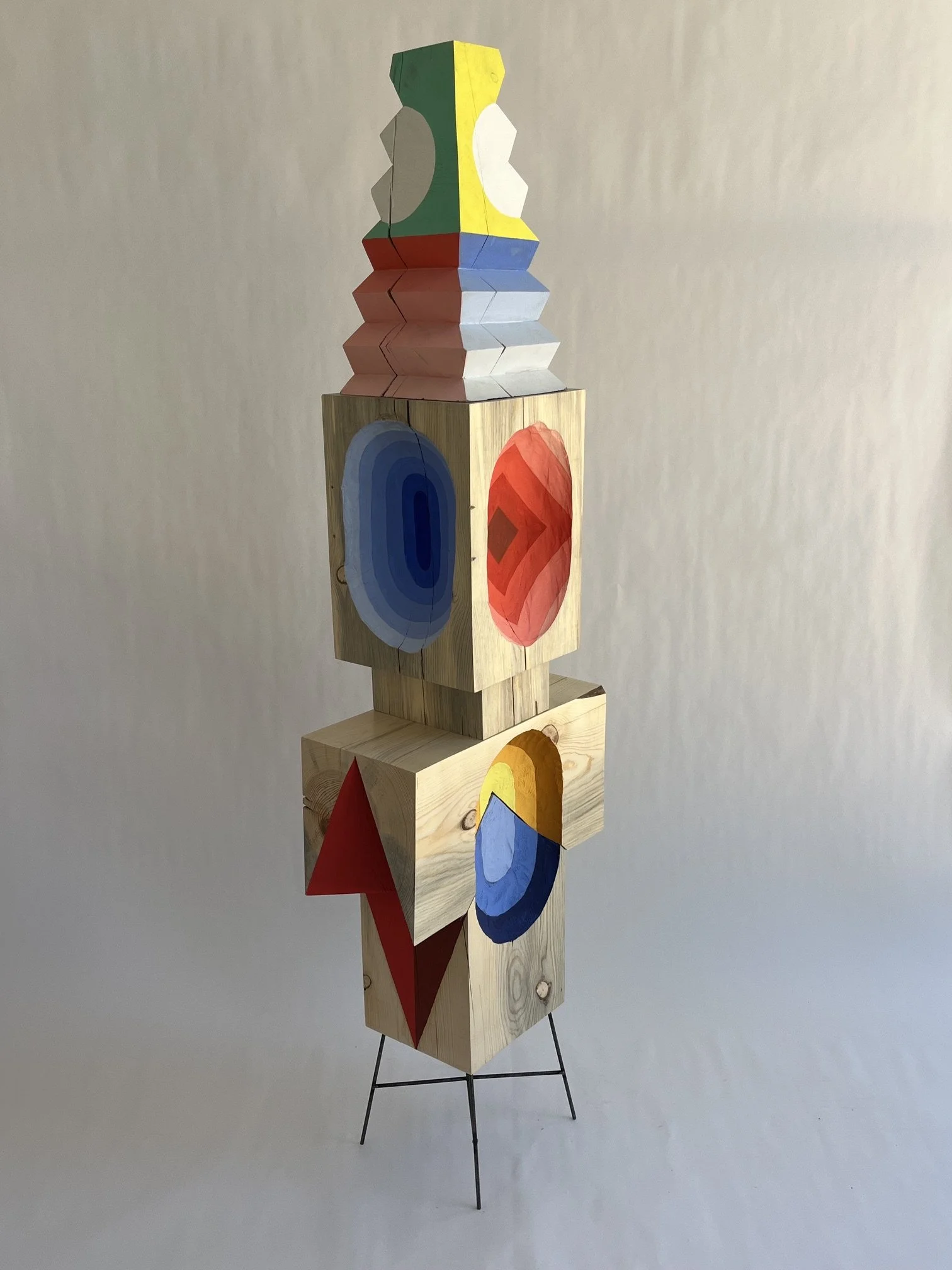
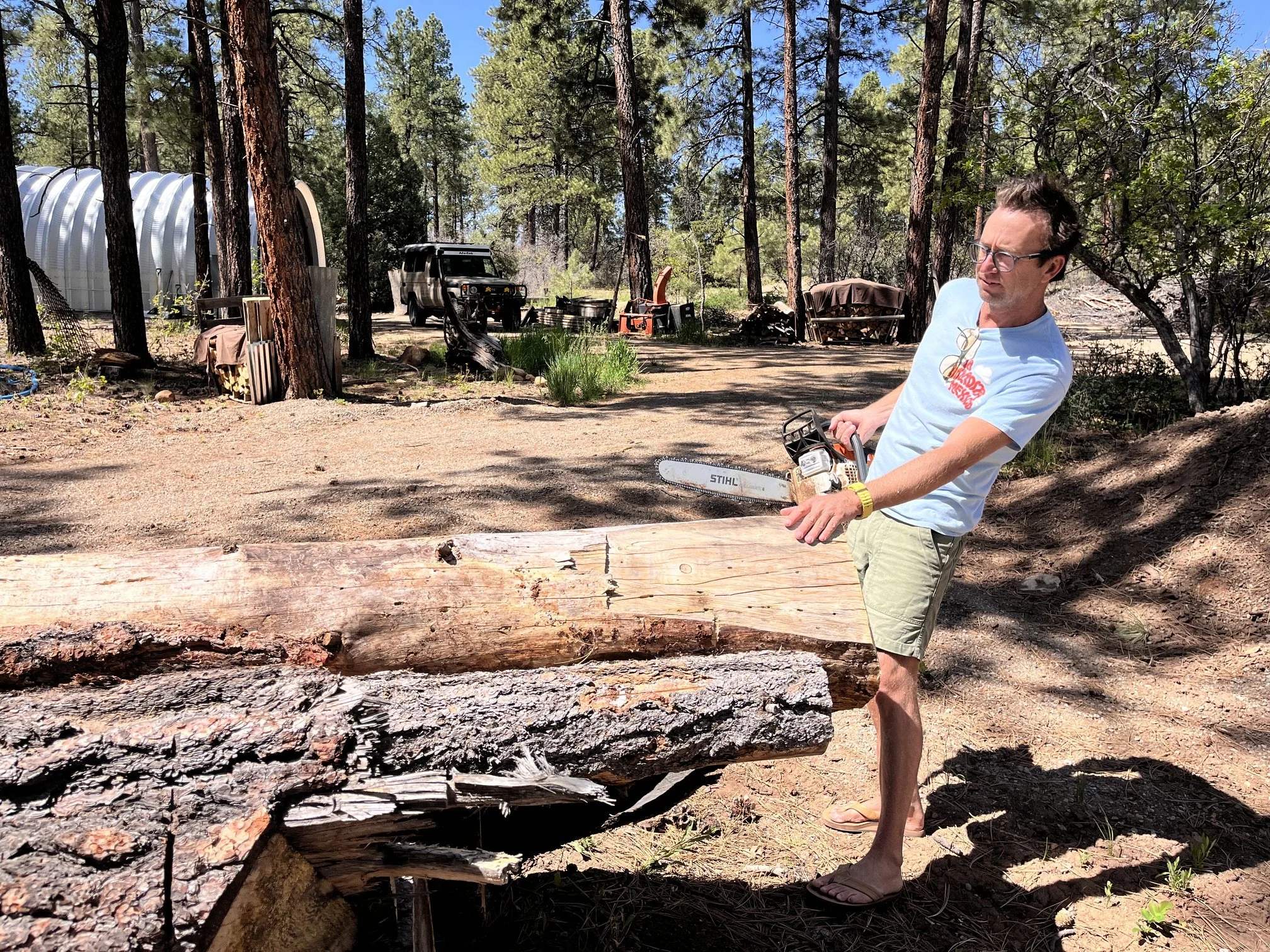
Lately I've been working on a series of sculptures using shaped painted and carved blocks of wood assembled in towers that are roughly human sized. The trees are all cut down on my land, milled here, seasoned here, and utimately made into sculptures right here. The components of each sculpture are assembled in a way that is reminiscent of the process of collage. Sometimes I will carve a part, and it will hang around the studio for years before it finds a home in a finished sculpture. The final pieces are painted and shaped to emphasize optical color effects that create an unusual visual experience. My attempts to manifest this kind of visual dynamism is currently playing out in an additional way in a series of kinetic mobiles, where the various parts move and interact in a state of constant flux. Living with art is a way of inviting a kind of visual and intellectual novelty into our experience. I myself collect Navajo rugs. I'm always inspired by their geometry, color, texture and history. Art can always help us see ourselves and the world in new ways.
The lowdown
Favorite travel destination? My wife and I love to travel and are currently obsessed with long boarding. We have been going to Mexico and Costa Rica at least four times a year now for a while, and the stoke just keeps growing. Speaking of an aesthetic experience in a state of constant flux, Surfing is one of the most challenging, fulfilling, and wonderful things anyone can do. Surfing is all about drawing lines on the wave, in a moment where everything else slips away in an ephemeral instant. Hearing surfers talk about surfing is almost as bad or maybe worse than hearing artists talk about art!
Favorite book and/or movie? Japanese surf videos, any surf video with nat young, ryan burch, harrison roach, alex knost, kelis kaleopaa, kristy murphy. There are so many beautiful and inspiring surfers out there. These are my favorite movies. And books - probably shouldn't get me started. I mostly read natural history. I read a lot. This winter I read and re-read Stephen Jay Gould's book Wonderful Life, which is all about early evolution. It's a fascinating account of early and bizarre diversity in a precambrian fossil formation called the Burgess Shale. It seems strange but I couldn't put it down. The new Michael Pollan book 'A World Appears' is quite good. A super fun dive into what consciousness is. There is a book by a guy named Zak Podmore, who lives in Bluff, Utah. It's called "Life After Deadpool" which is all about lake powell and its future in a time of increasing aridity and climate change. "Metazoa" by Peter Godfrey Smith, is a book I can highly recommend. It's about biodiversity, and the diversity of and evolution of consciousness. Ties into Michael Pollan’s book in a lot of interesting ways. I could go on and on.
Favorite artist(s), designer(s), architect(s)? This is an almost impossible question for me, not because I don’t have any, but because i like a lot of disparate artists, designers, and architects for what to me feel like personally nuanced and obviously utterly subjective reasons. It'd be easier and maybe more informative to ask what I hate! Maybe.
What's always playing in your studio — music, podcast, silence? Right now - today - I'm on a mission to listen to weird Japanese psychedelic jam bands. Upupayama is at least a name I can spell. Yuma Abe is another. Tomorrow i might listen to The Commodores or Solange Knowles all day. But music is almost always on in my studio, in my life. Lots of 20th century American jazz. Lee Morgan, Herbie Hancock, Ahmad Jamal, John Coltrane, Sun Ra, Wayne Shorter..... on and on....
Finish this sentence: "Making things…”
… has taught me to always be curious, and to expect happy accidents, especially when you think you have no idea what you're doing. One should always cultivate a perspective of "not knowing". That's ultimately the only way to learn or do anything new.
Maker Spotlight Series
MAKER SPOTLIGHT SERIES
KATHLEEN KEENE JONES
Ceramic Artist
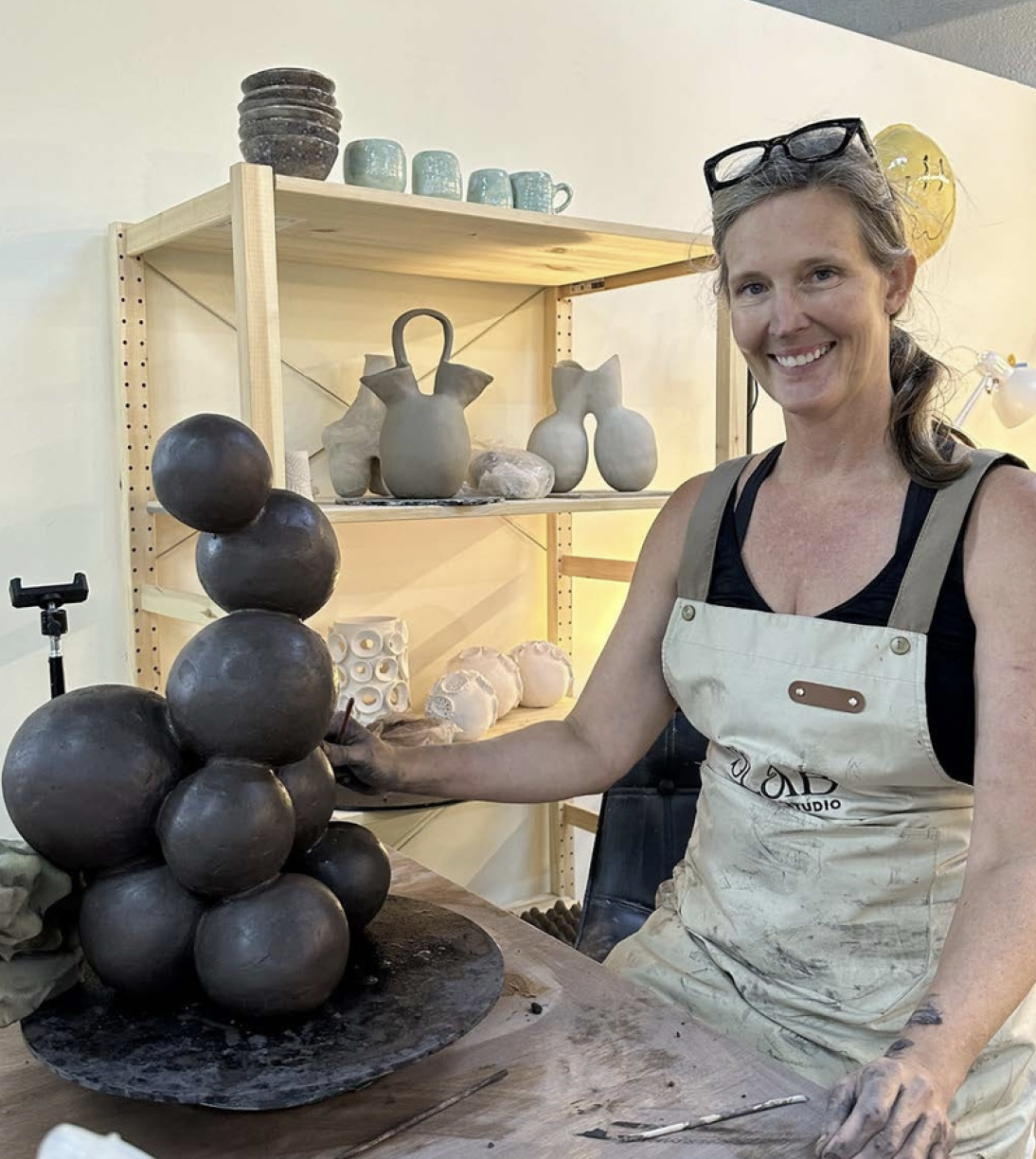
Artist Kathleen Jones at work in Smiley’s Art Room Collective
THE QUICK + FUN LOWDOWN:
Favorite travel destination or past trip? Zanzibar
Favorite book and/or movie? Book: Less; Movie: The Usual Suspects
Favorite artist(s), designer(s), architect(s)? Georgia O'Keefe!
What's always playing in your studio — music, podcast, silence? Music, ideally from the 70s and 80s or pretty much anything that fellow artist Joe Schafer puts on the in the Smiley Art Room!
Finish this sentence: "Making things heals me."
Tell us about yourself — who are you and what do you make/create?
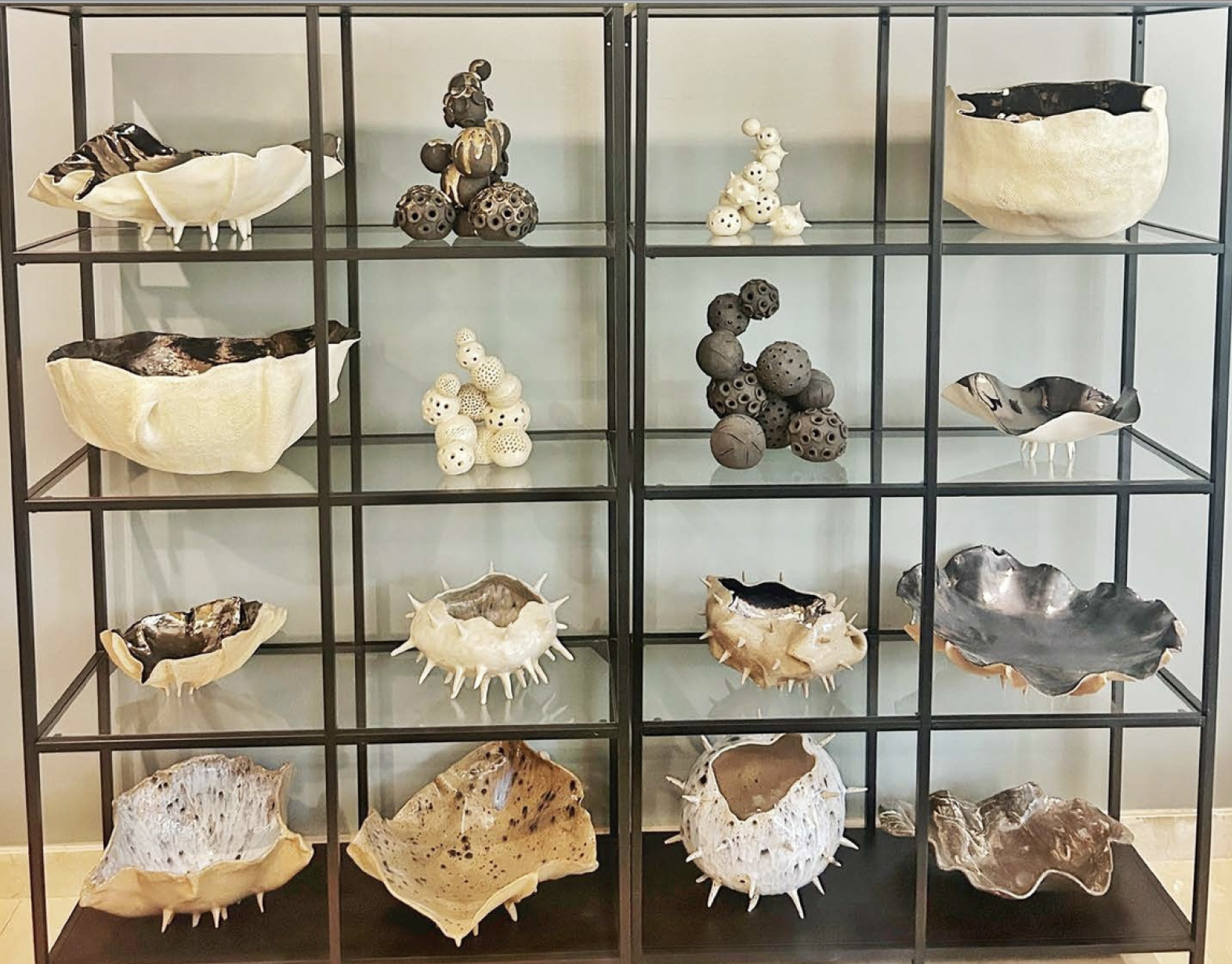
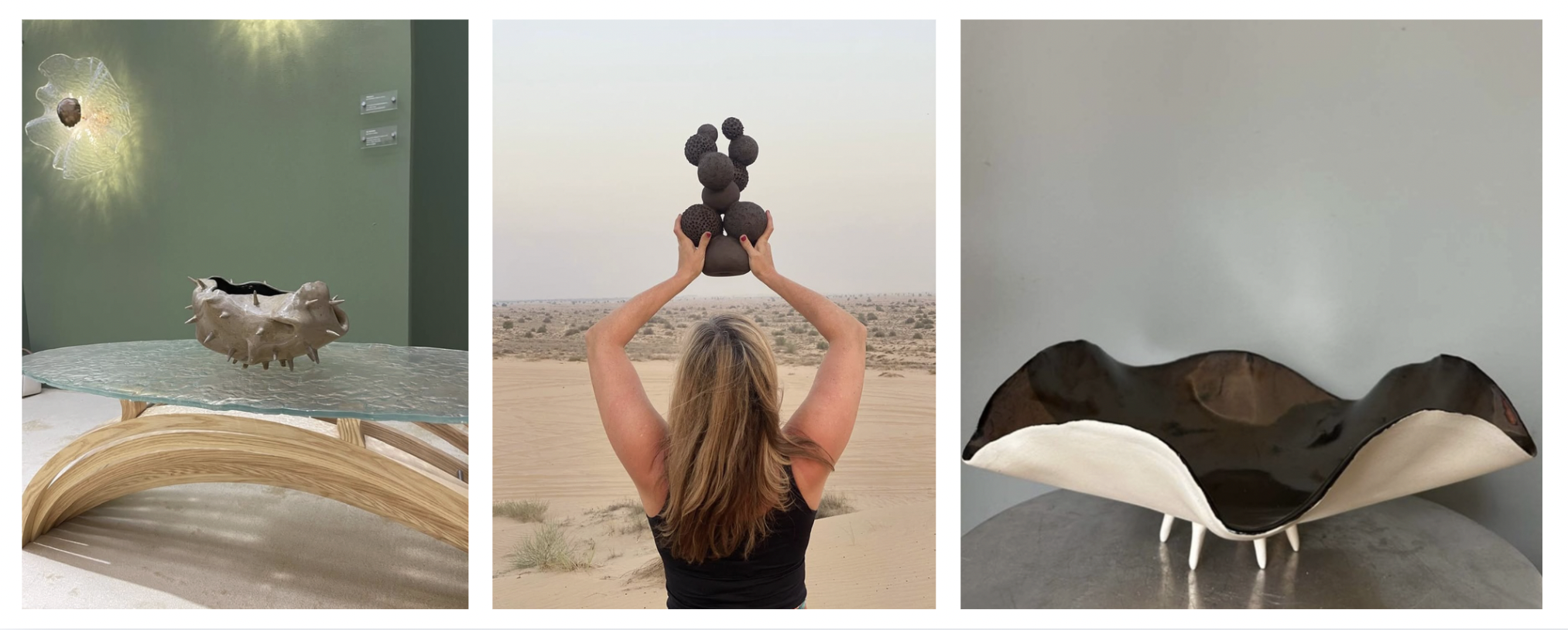
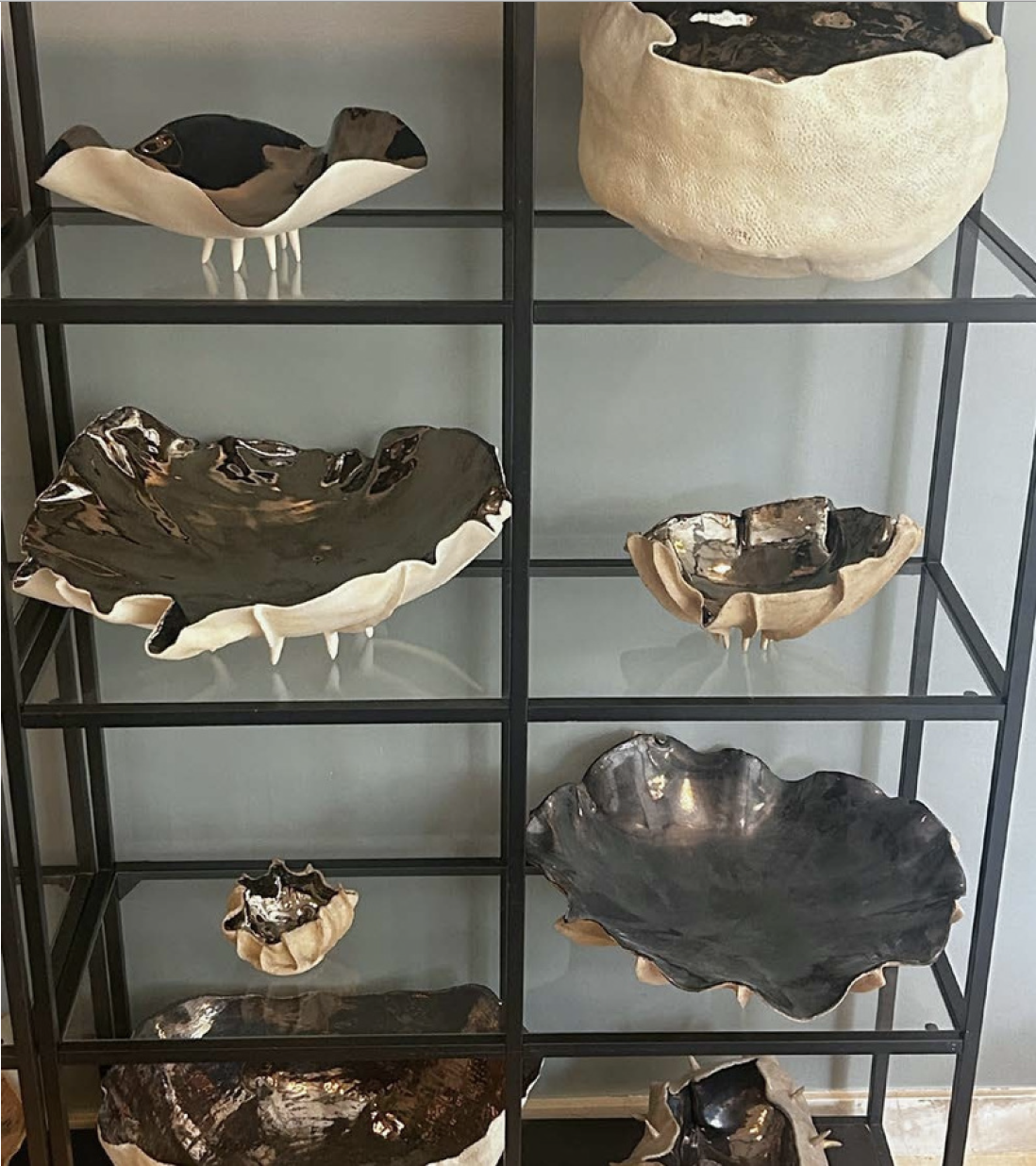
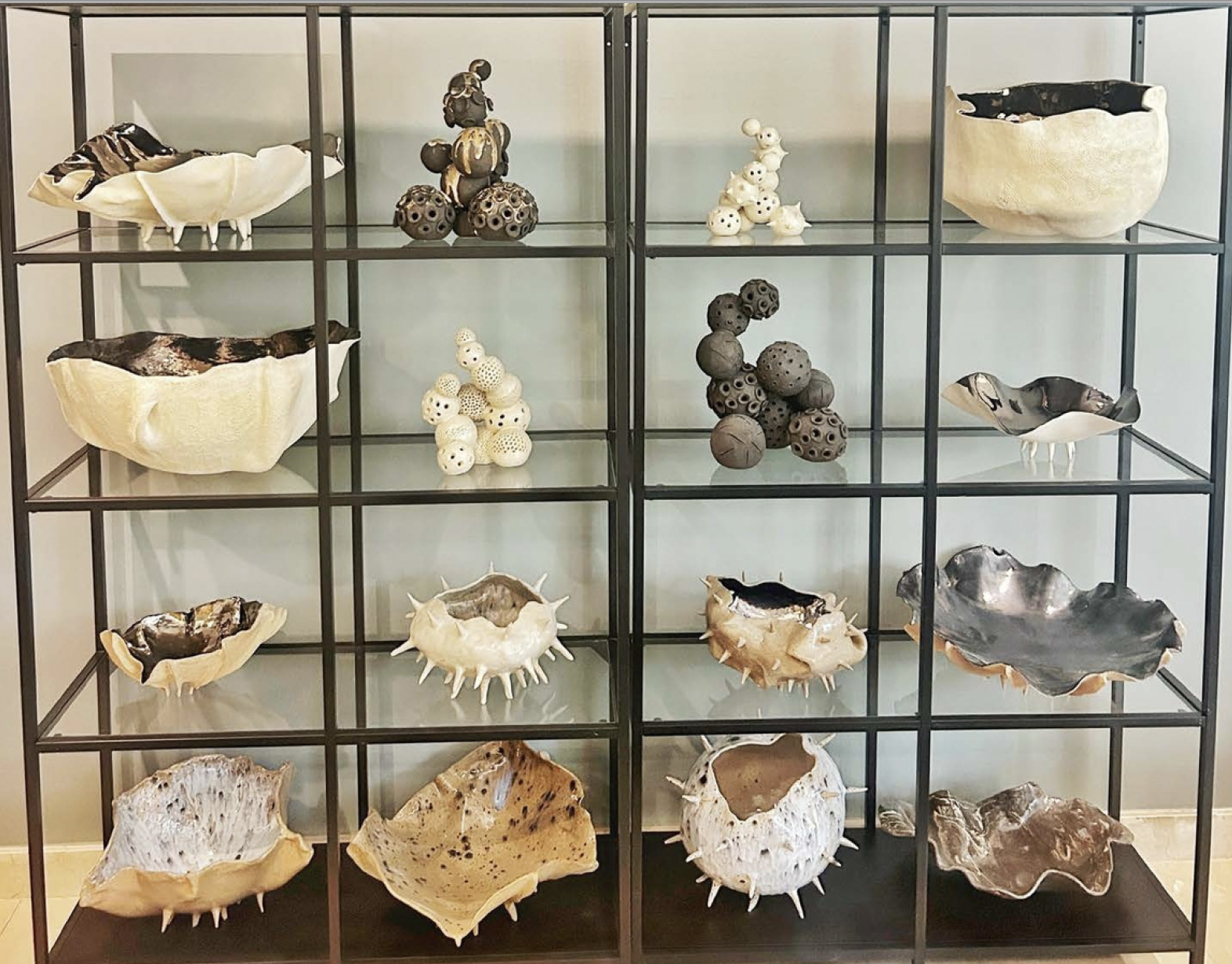
I am a ceramic artist working primarily in hand-built sculpture. My work explores the tension between strength and fragility — how something can feel precarious and grounded at the same time.
I build forms shaped by the landscapes I’ve called home — deserts, mountains, tidal edges, geothermal springs — places where elemental forces are visible and unfiltered. My career in multilateral diplomacy deeply shaped my sculptural language; living in regions marked by both beauty and complexity taught me that resilience is rarely symmetrical or polished.
The pieces I create often lean, tilt, cluster, or hover. They are intentionally imperfect. Rough clay remains exposed. Surfaces shift from matte to reflective. I am interested in the quiet structures that hold things up — in nature and in people — and in the beauty that emerges through imbalance.
How did you first discover your craft — what was the spark or what drew you to it?
I studied ceramics in college, but clay reached me earlier than that. I grew up in the Southwest, spending part of my youth on ranches. That early connection to land — to soil, to heat, to material — stayed with me.
For a long time, my professional life moved in a different direction. It wasn’t until years of living abroad — in Afghanistan, South Sudan, the Dominican Republic, and the Gulf (United Arab Emirates)— that my sculptural voice truly took shape. The elemental landscapes and the resilience of the communities within them gave me something I needed to translate physically.
Clay became the way I processed those experiences. Earth turned by water, hardened by fire, touched by air — the material itself mirrors the forces I’ve witnessed.
Where do you source your inspiration? What sparks a new idea or collection?
Place is always the starting point.
A sandstorm reshaping a horizon. A tide pool holding fragments the sea has left behind. The way geothermal water rises through rock. The submerged stillness beneath clear ocean waters.
Each collection begins with an environment — and with the emotional tension that environment carries. Sandstorms became a study of disruption and renewal. Tideworn grew from the quiet basins left when water retreats. Pagosa was rooted in reverence for land and inherited memory. Submerged explored pressure, suspension, and transformation beneath the surface.
I don’t illustrate landscapes. I try to embody what they do.
Is there a person, place, or experience that has most shaped your creative path?
Living in regions shaped by elemental extremes and geopolitical complexity changed me. Afghanistan’s austere mountains. South Sudan’s White Nile. The Musandam Peninsula where mountains fall directly into the sea.
But equally formative were the quiet inheritances of the American Southwest — the springs of Pagosa, the cairns along a river, the knowledge embedded in land long before I arrived.
I have learned that endurance is never flawless. That lesson runs through everything I build.
What are you currently working on or excited about?
Right now, I’m working on a collection inspired by the geography of the Four Corners, specifically Antelope Canyon and Red Cliffs, called Carved by Light. I also have plans to make a collection inspired by Watersheds.
Is there a dream project or medium you'd love to explore?
I would love to create a site-responsive installation — something that interacts directly with landscape, light, or water. Work that lives outdoors, where weather becomes collaborator rather than threat.
I’m also intrigued by integrating subtle movement — not in a theatrical way, but in a way that deepens the sense of breath or suspended time within a piece.
How do you see your work adding to someone's home and collection?
In a home, I could see the pieces become quiet anchors — forms that invite you to walk around them, to notice shadow, to feel weight and balance. They shift with light throughout the day. They ask for a moment of attention, and in return, they offer steadiness.
I hope they bring a sense of groundedness — a reminder that strength can lean, that beauty can be asymmetrical, and that what endures is rarely polished.